

-
Kathmandu
-
Flight
-
5-7 hrs.
-
BLD
-
Lodge
-
6,476 M
-
Spring, Autumn
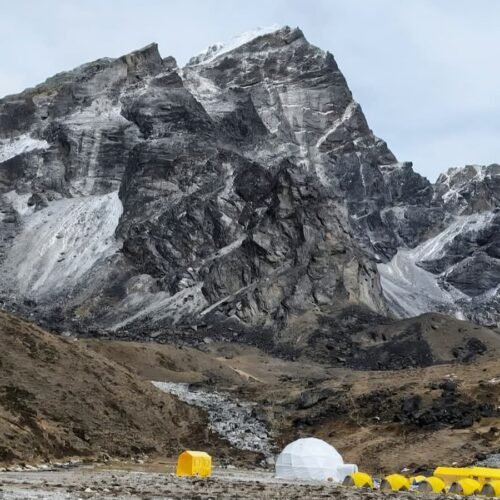
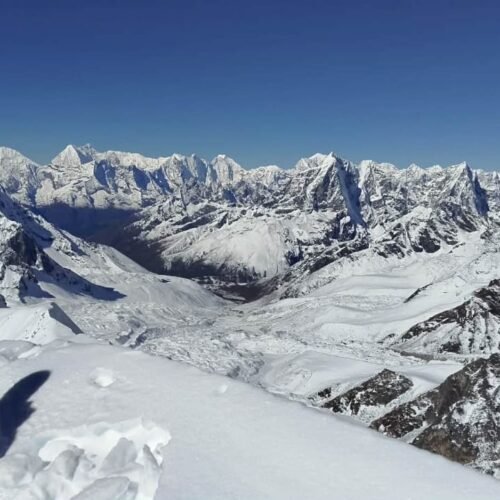
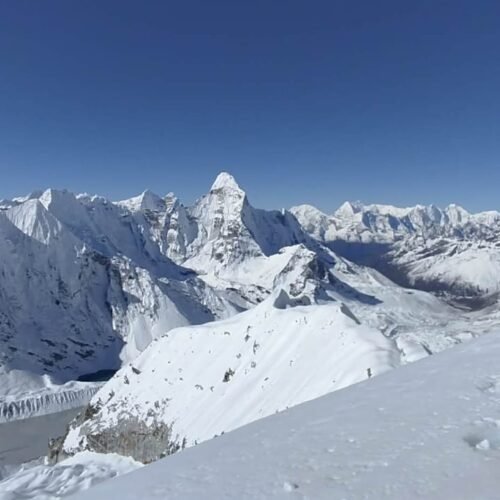
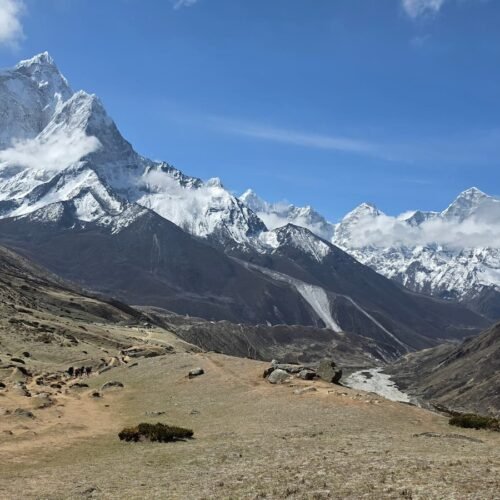
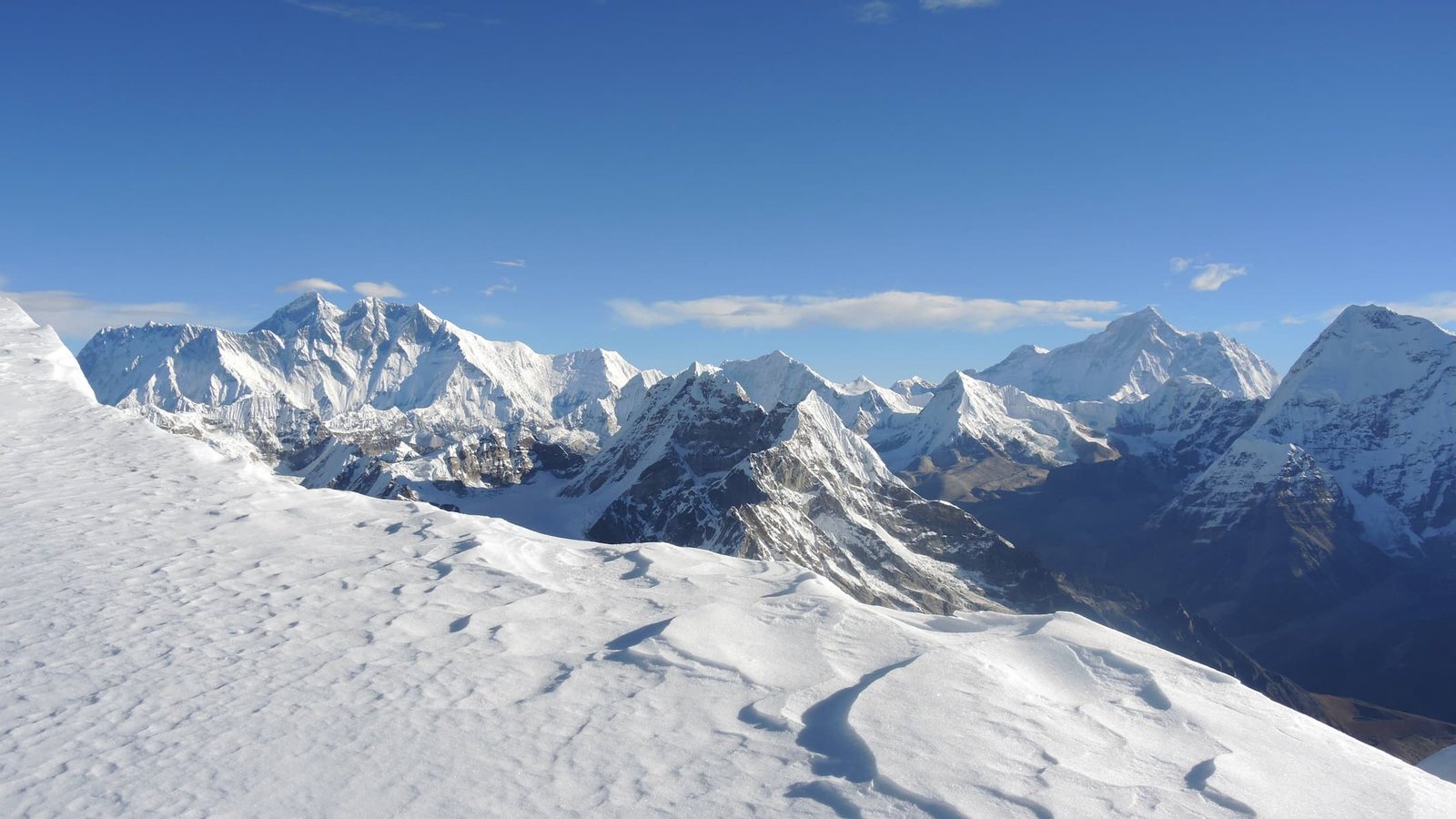
Mera Peak (6,476m) lies within the Everest Region and is one of the most popular trekking peaks in Nepal. The summit offers a stunning vista of five 8000m peaks: Mt. Everest, Lhotse, Cho Oyo, Makalu, and Kanchenjunga. Several other beautiful peaks and mountains can also be seen from the summit – of course, weather permitting.
Mera Peak, Suitable Even For Climbers With Less Experience.
Mera peak route from the north is suitable even for climbers with less experience. However, it involves traversing a glacier at high altitude. The western ascent as well as the south face is more difficult and suitable for experienced climbers. Due to climate change, the conditions on the summit block have become more difficult over the years. Nevertheless, the normal route is still reasonably straight-forward with minimal technical difficulties (F / PD). The main obstacle is the proper acclimatization to the altitude. You can rely on us to carefully design the schedule for an optimal acclimatization. Though Mera Peak is one of the highest trekking peaks in Nepal, it would also be suitable for a climber visiting the Himalayas for the first time given a sufficient level of physical fitness. Ken hill walkers with some experience using crampons and ice-axe are well suited for this adventure. We are happy to offer you advice if you have any doubts or require any tips for your preparations.
Siddhartha Trekking offers you a full board package including the climbing permit from the NMA and all other necessary logistics – from arrival in Kathmandu up to your departure. We organize your accommodation in Kathmandu as well as throughout your trek, our cooks freshly prepare you nutritious meals throughout the climbing period and experienced and professional trekking and climbing guides accompany you on the trek as well as the climb. In addition, we can organize any sightseeing in and around Kathmandu. Upon your request, we can also offer only base camp service (including the climbing permit) where the climber may arrange all required logistics for any part of the climb above base camp.
The package can be flexibly adjusted to your requirements – feel free to contact us any time for suggestions and advice. We’d be happy to take you on this adventure.
Trip Highlights
- Terrain: Primarily moderate snow slopes and glacier traverses using crampons, harnesses, and ice axes. Fixed ropes and ascenders (jumars) are typically used only for the final 30–40° summit headwall.
- Mountaineering Stepping Stone: Frequently used as an introductory peak to test high-altitude physiology before tackling technical peaks like Ama Dablam or 8,000-meter expeditions.
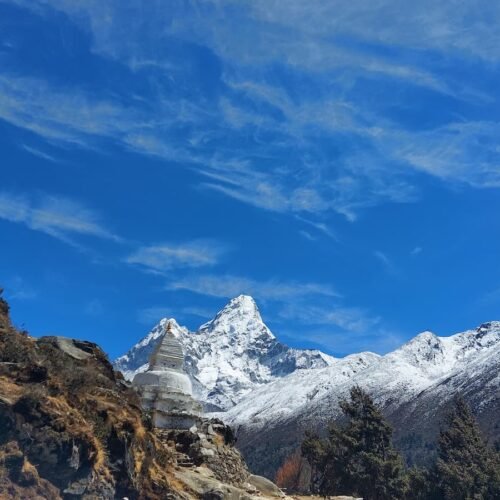
- Passes through dense rhododendron and pine forests before transitioning into alpine moraine.
- Connects through isolated Sherpa settlements including Chutanga, Kothe, Thangnak, and the final staging village of Khare (5,045 m).